

Mathematics
Our ambition for demanding, structured, and bilingual teaching
Preparing the minds of tomorrow
Mastering mathematics plays an essential role in schooling: it allows students to build fundamental knowledge, but also to develop their ability to reason, model, argue, and solve problems.
Odyssey Education has made mathematics one of the priorities of its educational project. Our approach is based on the French curriculum, enriched by the contribution of international practices and by the results of research in didactics, cognitive sciences, and educational sciences.
Our ambition is to build, from primary school, solid and lasting learning by articulating three complementary dimensions: understanding concepts, acquiring automaticity, and learning to reason. In our bilingual establishments, this work is conducted in a coordinated manner in the different languages of instruction.
The 3 pillars of our teaching
Building solid knowledge
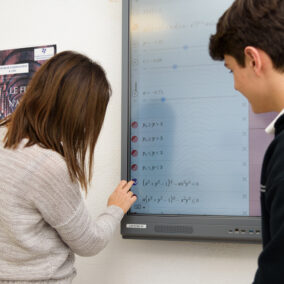
Thanks to explicit and progressive teaching, our teachers guide students from the discovery of concepts to their autonomous practice. This approach combines deep understanding and automation of fundamentals to build lasting mathematical foundations.
Reasoning and verbalizing
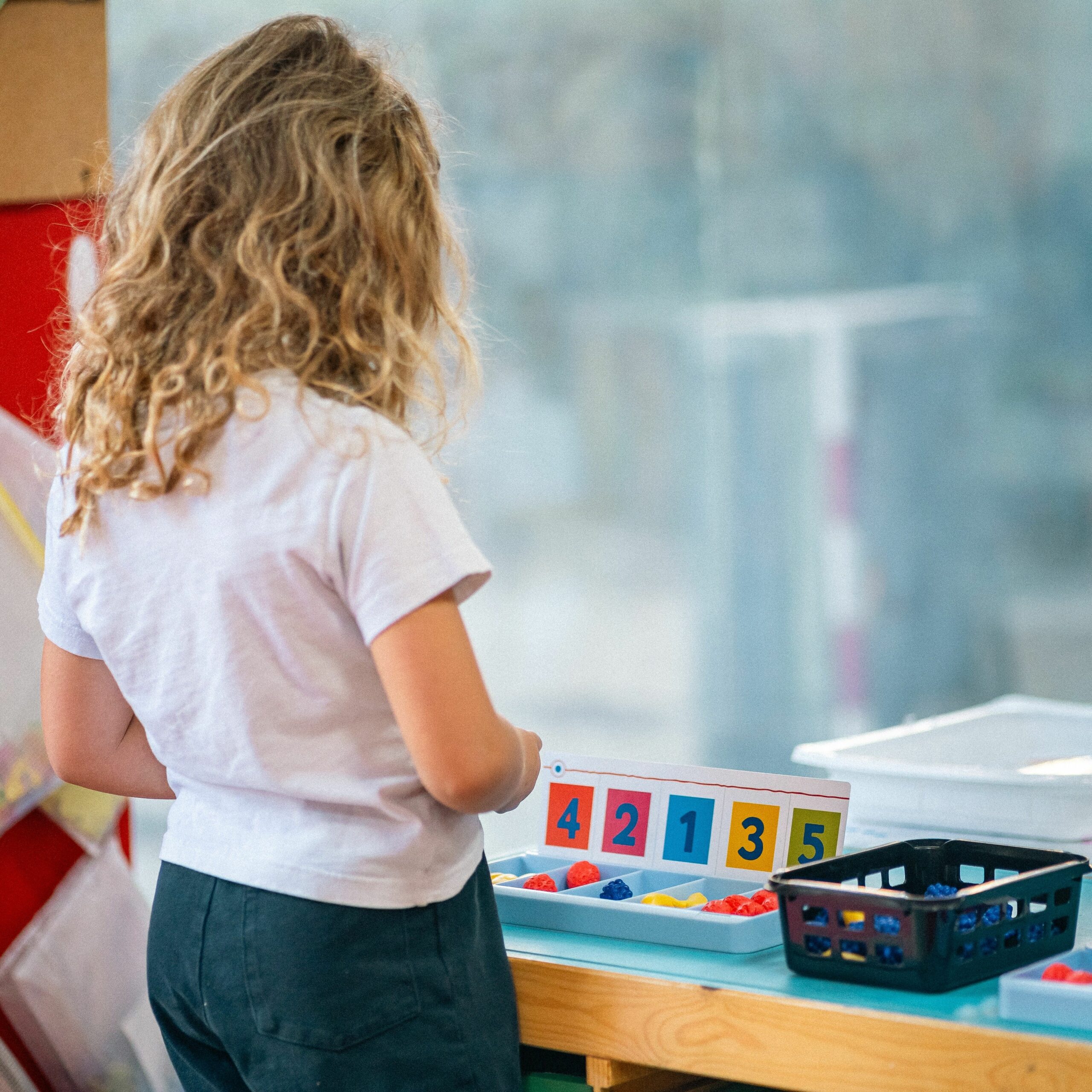
Through manipulation, visuals, and exchange, we teach students to model situations, test hypotheses, and justify their approach. Errors are valued as an essential lever to analyze, adjust, and consolidate reflection.
Thinking mathematics in two languages
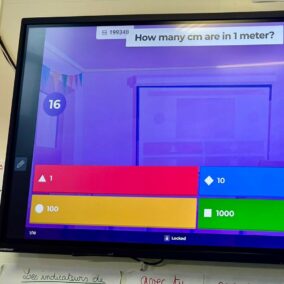
Understanding, explaining, and applying the same concept in French and English allows the student to go beyond vocabulary to fully grasp its meaning. This bilingual approach promotes the transfer of knowledge and a stronger appropriation of mathematical concepts.
How do we learn mathematics at Odyssey?
Within Odyssey Education establishments, the learning of mathematics is based on a structured approach, founded on the latest advances in cognitive sciences, to make concepts accessible and stimulating for each student. Our approach is based on four fundamental axes implemented by the teachers:
- The Concrete-Pictorial-Abstract (C-P-A) progression:
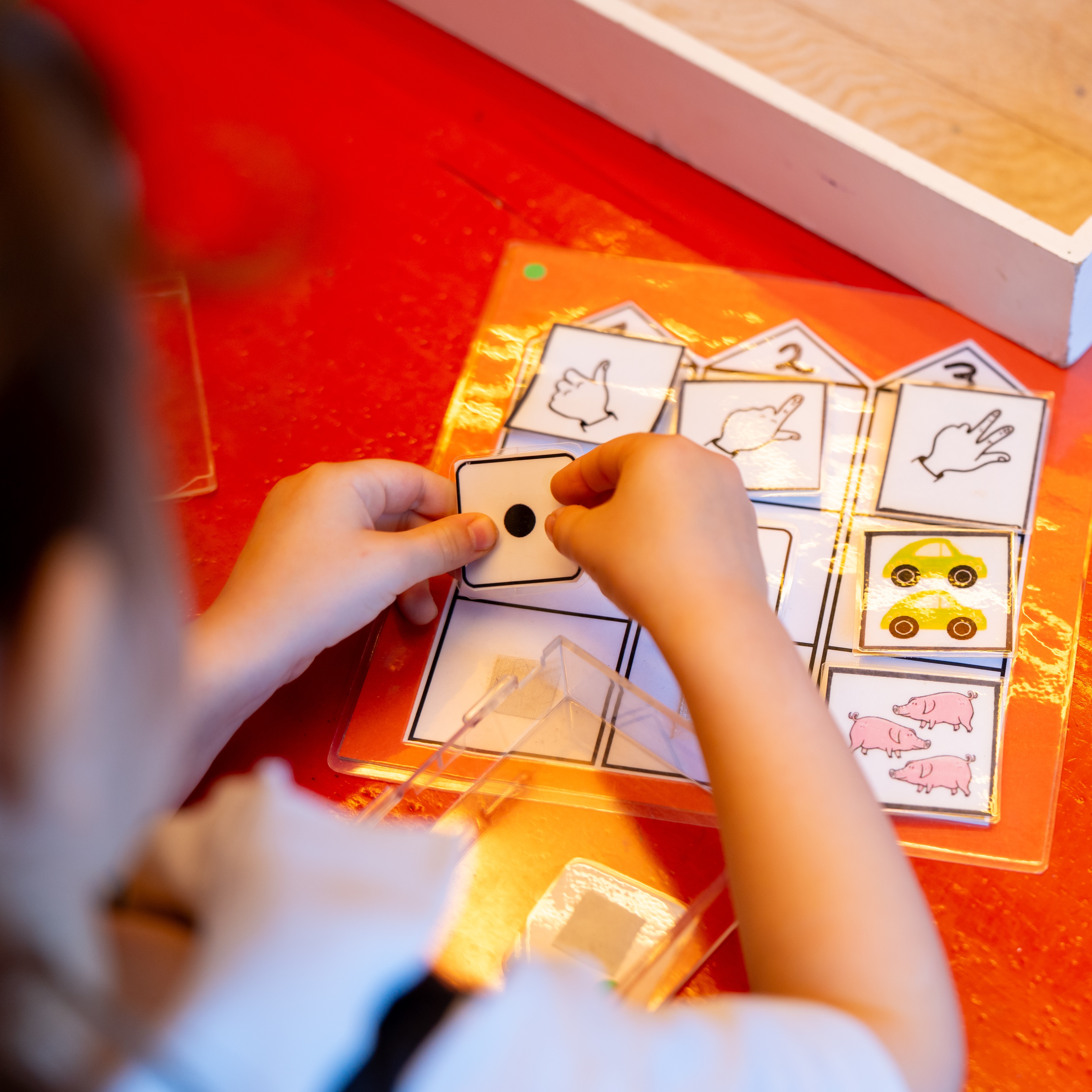
To ensure a deep understanding, we favor a gradual approach. The student first manipulates concrete objects (cubes, tokens) to give meaning to the number, then uses visual supports (diagrams, illustrations), before approaching abstract mathematical symbols. This method prevents rote learning and ensures a lasting acquisition of concepts. - Reasoning modeling:
To allow students to approach problem-solving with serenity, we teach visual modeling tools, such as bar models. By making the stages of reflection visible, this method helps to structure thought and remove cognitive blocks related to the complexity of the statements. - Metacognitive verbalization (“Think Aloud”):
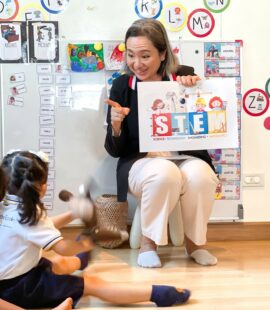
The teacher models their reasoning out loud, thus offering students a key to understanding their own mental processes. In return, this practice encourages students to put their strategies into words, to explain their reasoning, and to exchange with peers. This systematic verbalization process is essential for structuring mathematical thought and promoting learner autonomy. - Practicing and reactivating over time:
Understanding a concept is not enough to master it. Students must also practice, automate certain knowledge, and reactivate it regularly. Mental arithmetic, short training sessions, problems, review of previous concepts, and spaced reviews allow for the progressive consolidation of learning and making certain knowledge sufficiently available to tackle more complex tasks.
Key figures

languages of instruction
A structured articulation of mathematics in French and English, in accordance with the French curriculum and enriched by Cambridge Primary Mathematics resources.

major didactic principles
Declined into 16 pedagogical principles, from explicit teaching to problem-solving, from automation to verbalization and bilingualism.
complementary dimensions
nderstanding concepts, acquiring automaticity, developing reasoning.
"Our ambition is to allow each student to build a solid understanding of mathematics, to acquire the essential automatisms and, above all, to learn to reason with confidence. In our international schools, this requirement is accompanied by specific work on mathematical language and the ability to mobilize the same concepts in several languages."


Focus on bilingual learning
What is the point of learning mathematics in French and English?
Mathematics is not independent of language. Understanding a statement, explaining a strategy, formulating a hypothesis, or justifying an answer requires mastering precise vocabulary and linguistic structures.
In Odyssey establishments, teams therefore ensure that explicit bridges are established between languages. A concept can be discovered in one language and then reinvested in the other; teachers coordinate vocabulary, representations, and progressions to avoid compartmentalized learning.
The French curriculum remains the common reference framework. Depending on the context of each establishment, it can be enriched by international resources, notably those of Cambridge Primary Mathematics.
The objective is therefore not to juxtapose two mathematics courses, but to allow students to mobilize the same mathematical reasoning in several linguistic and cultural environments.
Need more information?
We remain available to help you find the best school for your child.