

Odyssey Science Week 2026
Curiosity as a gateway to the world
Odyssey Science Week 2026
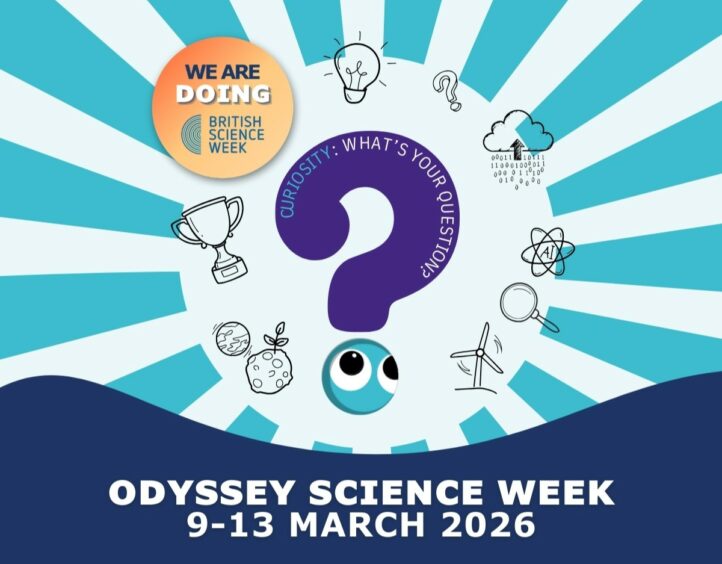
At Odyssey Education, we see science as a lens through which we decode the world. It requires us to observe with precision, asking increasingly sophisticated questions, and possessing the intellectual humility to change one’s mind when evidence demands it. From March 9-13, our schools will celebrate Odyssey Science Week, a whole week designed to make scientific thinking visible, joyful, and deeply meaningful ; bridging ages, borders, and languages.
A central theme
This year, we are once again aligning our Science Week with British Science Week, which carries the theme “Curiosity: what’s your question?”.
Why would a French International school group participate in such an event? Because it exactly is deeply rooted in the Odyssey DNA to have a best-of-both-worlds approach: combining French academic rigour with a British tradition of hands-on, inquiry-based learning.
1. From answers to inquiry
Traditional science education often focuses on the “end product”: the memorized formula or the reproduced diagram. However, real-world science begins much earlier: with an authentic question.
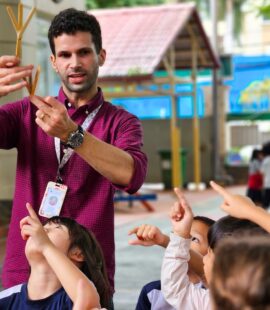
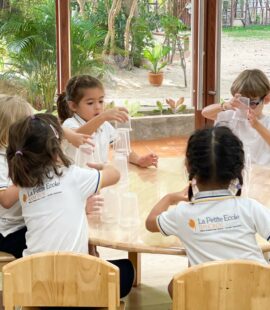
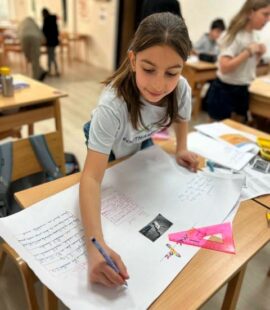
This is the essence of Inquiry-Based Learning (IBL). In our classrooms, inquiry is not “free play”; it is a structured intellectual journey. Guided by teachers who scaffold their thinking, students move from passive consumption to active investigation.
The Power of the Question
By reversing the traditional hierarchy, starting with a student’s “What if?” rather than a teacher’s “Today we learn”, we foster a deeper level of engagement. Whether a student is asking “How do the bees help flowers?” or “How could astronauts grow food on Mars?”, they are learning the fundamental mechanics of the scientific method:
- Hypothesizing: Predicting outcomes based on prior knowledge.
- Designing: Determining variables and measurement criteria.
- Reasoning: Analyzing data to form evidence-based conclusions.
The value of IBL extends far beyond the lab. It builds transferable life skills: autonomy, critical thinking, and the ability to navigate uncertainty, traits essential for success in any future career.
2. The bilingual advantage
Odyssey schools are proudly rooted in French excellence, yet our mission is resolutely international. Aligning with British Science Week is a pedagogical lever that supports two of our core pillars:
Science through DNL (Discipline Non Linguistique) A cornerstone of our approach is the use of DNL, where science is taught through the medium of a foreign language (English). This turns the language into a functional tool for discovery rather than just a subject of study. By debating ethical points in AI or presenting experiment findings in English, our students move beyond basic fluency to achieve “academic language proficiency.” Bilingualism stops being a school exercise and becomes a lived, intellectual experience.
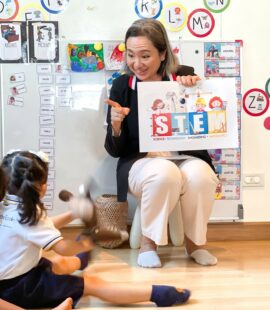
STEM+: Science in Context We embrace a STEM+ approach, where science is never isolated. It is naturally connected to the arts, humanities, sports, and ethics. This multidisciplinary approach ensures that our students don’t just understand how a technology works, but also why it matters to society. From biology-based debates to physics-led prototyping, we foster a “whole school” culture of curiosity that prepares students for the complexity of the modern world.

3. The Power of Wonder
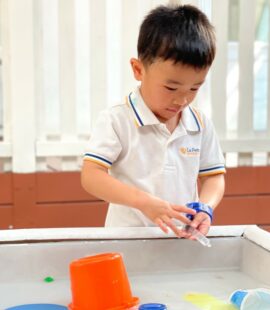
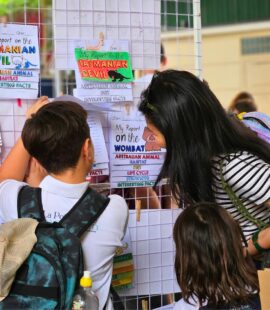
To lower the ‘barrier to entry’ for complex subjects, this week emphasizes humor and the ‘delightfully unexpected.’ The aim is to defuse ‘science anxiety’ and spark the initial wonder.
Preparing for Tomorrow
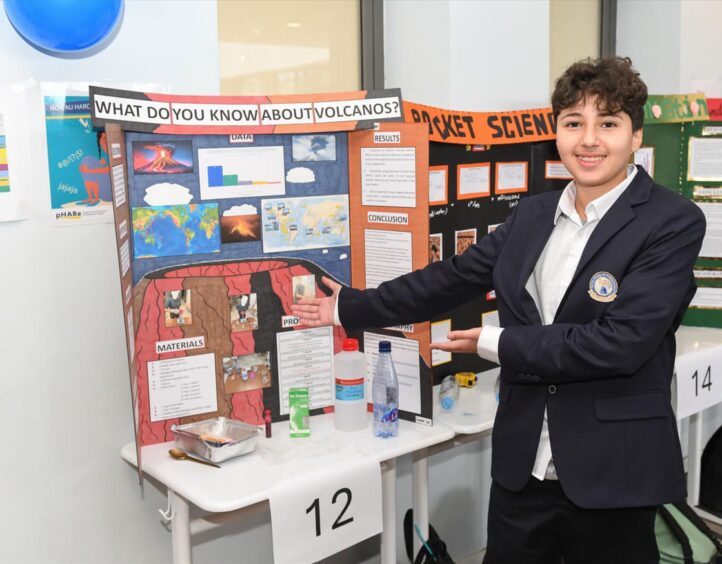
Odyssey Science Week 2026 is more than a date on the calendar; it is a statement of intent. By encouraging our students to ask "What’s your question?", we are preparing them for a world where the ability to investigate and reason is more valuable than the ability to simply remember. Through the fusion of French rigour and British inquiry, we give our students the confidence to move from simply knowing the world to actively understanding and shaping it.